Editorial. Cinematic. Different.
How Russell Investments reframed 90 years
CASE STUDY


One designer learned Flex from scratch and shipped a cinematic, scroll-driven anniversary experience in a single month.
The result? A scroll-driven editorial piece with parallax clouds, rotating articles, and a print-magazine feel that earned executive praise and an Adobe Summit feature.
Russell Investments, a 90-year-old global asset manager, brought their anniversary story to life through editorial, scroll-driven design powered by Ceros.






Russell Investments
Jared Simon
That's one thing that Ceros allows us to do — have pages feel different, not just look different.

~5 min


average dwell time on the anniversary experience
Visitors spent an average of five minutes with the piece — an extraordinary dwell time that signals genuine engagement, not just clicks.

CEO note, executive committee share, Adobe Summit feature


The experience earned internal executive recognition and was showcased at Adobe Summit as a standout example of digital storytelling.
Parallax clouds and editorial chapters brought print to digital
Scroll-rotating articles, parallax cloud layers, and editorial chapter breaks gave the story a print-magazine feel in a digital format.

One designer learned Flex from scratch and shipped in a month

“It's very much like Figma — that's helpful for designers. It got me up the learning curve pretty far right away.”
Flex turned 90 years into moments
Russell uses an enterprise CMS that does what enterprise CMS does well — but it has limits on what feels custom.
Ceros was rolling out Flex, and Russell was a beta user. Simon made the anniversary the real-world test — ambitious enough to find Flex's edges, visible enough to matter if it worked.


Turning 90 years into a scrollable story
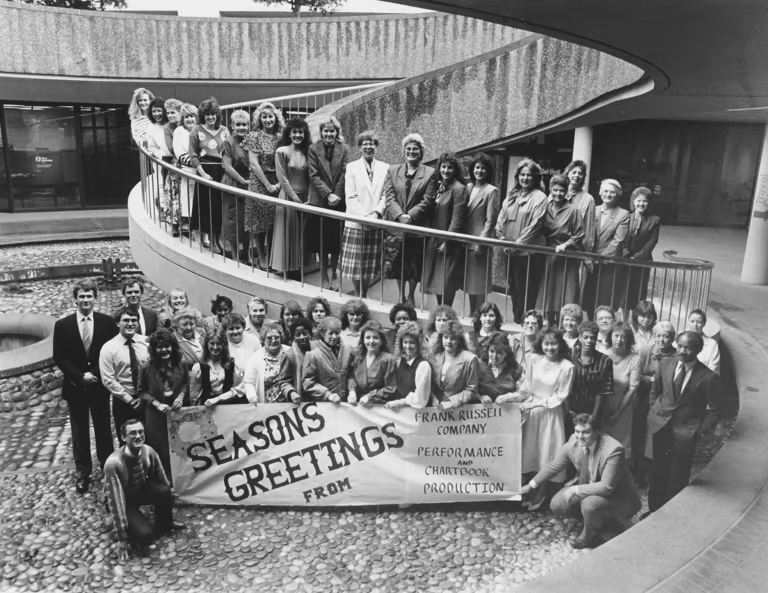
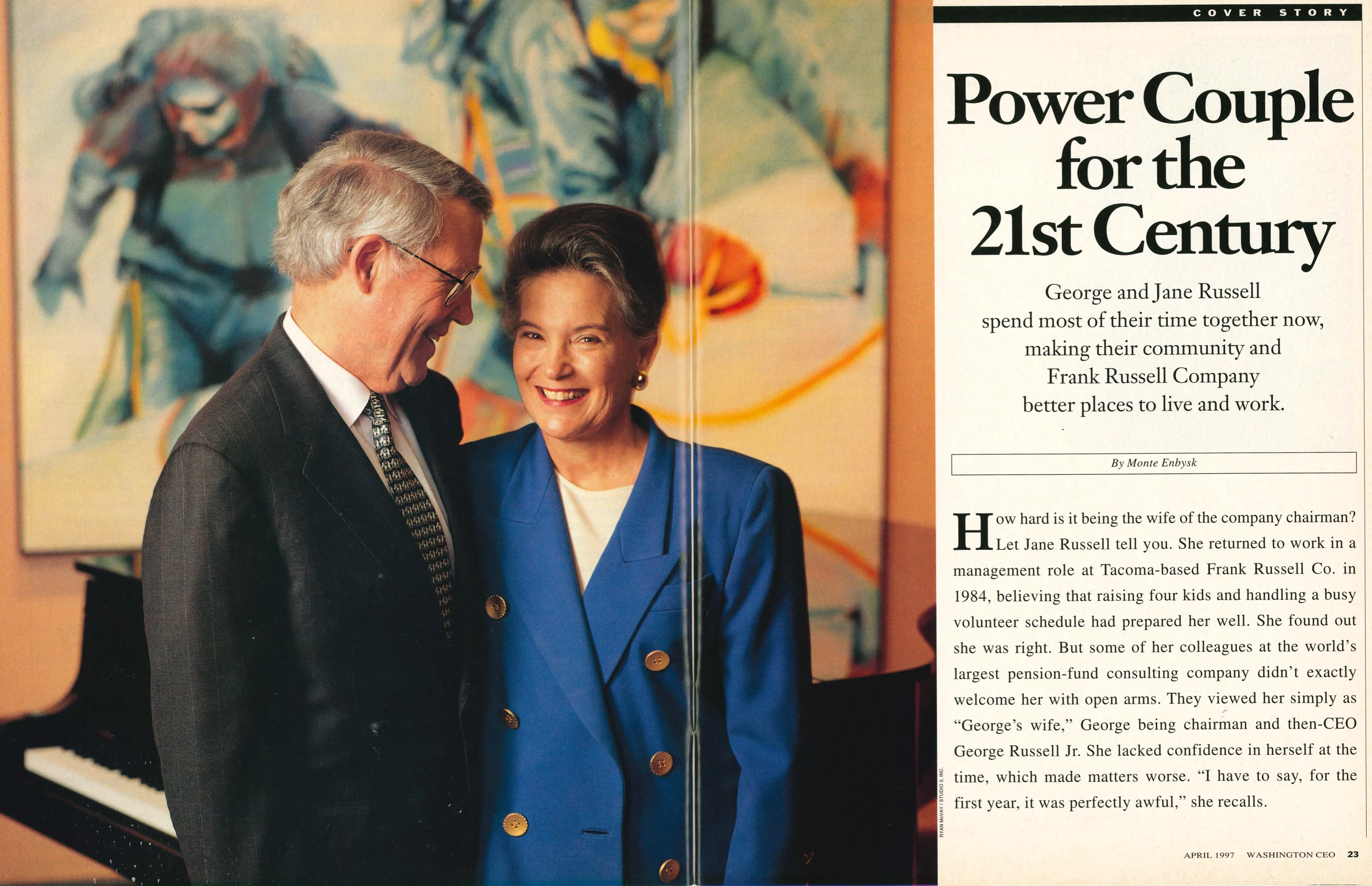
Russell Investments has been climbing for 90 years. Founded in 1936 by mountaineer George Russell, the company's identity has always been rooted in the mountain.


For their 90th anniversary, the team had a clear theme: 90 years and still climbing. But they also had a hard question...

Make your next story
feel different

Boring timelines couldn't carry 90 years
How do you tell a 90-year story without falling into a static corporate timeline?